 Dangerous Goods Compliance · ADR 2025
Foundations
A short, plain-English study companion for the 6-module DGMind Foundations track. Watch the video, write your answers below, take it home. Bring it back to your trainer for the completion sign-off on the last page.
What are 'dangerous goods'?
This module — What are 'dangerous goods'? — starts with "Petrol, bleach, gas, batteries — things you already know": Dangerous goods are not exotic. They are everyday products that can hurt people, animals or the environment if they leak, catch fire or spill. A jerry can of petrol on a hot day. The bleach under your kitchen sink. A gas bottle for the BBQ. A box of lithium batteries in a parcel. When any of these are moved by lorry, van, train, ship or plane, special rules apply so they travel safely. Then, "Why we need rules — what could go wrong": Imagine the bleach leaking onto a box of food. Or a petrol can splitting in the back of a hot van. Or batteries shorting in a parcel and catching fire on a plane. These have all happened, and people have been hurt. The rules exist to stop them happening — by saying how to pack, label, load, drive and unload these products safely. Then, "Who has to care?": The rules don't only apply to chemical factories. A corner shop sending a courier with a bottle of nail-polish remover is affected.
- Dangerous goods = ordinary products that can cause harm.
- Examples: petrol, bleach, BBQ gas, batteries.
- Special rules apply when these are moved.
- Real incidents (fires, spills, poisonings) shaped the rules.
- Rules cover packaging, labelling, loading, driving, unloading.
UN numbers — the 4-digit 'name tag'
This module — UN numbers — the 4-digit 'name tag' — starts with "What a UN number is": Every dangerous substance in the world is given a 4-digit 'UN number' so it can be identified the same way everywhere — on a lorry in Britain, a ship leaving Rotterdam or a parcel landing in Dubai. The 'UN' stands for United Nations. Petrol is UN1203. Sulphuric acid is UN1830. Lithium-ion batteries are UN3480. The UN number is like a name tag the whole world agrees on. Then, "Three you'll see a lot": Three real UN numbers you'll meet again and again in this app — and in real life: UN1203 = petrol (motor spirit) — Class 3 flammable liquid. UN1830 = sulphuric acid — Class 8 corrosive. UN3480 = lithium-ion batteries — Class 9 miscellaneous. Don't try to memorise them yet; just know they're real, fixed and worldwide. Finally, "Don't confuse it with other codes": Lots of numbers float around in transport. A UN number is always 4 digits, often written as 'UN1203'. It's NOT a postcode, a delivery time, an ISO standard or a vehicle plate.


- A UN number is a 4-digit ID for a substance.
- Same number worldwide — UN1203 = petrol everywhere.
- Used on paperwork, package marks and tanker plates.
- UN1203 = petrol — Class 3 (flammable liquid).
- UN1830 = sulphuric acid — Class 8 (corrosive).
The diamond hazard symbol
This module — The diamond hazard symbol — starts with "Why a diamond?": When you see a lorry or a parcel with a coloured diamond on the side, that diamond is the hazard label. A picture on top (a flame, a skull, a fish, a bomb) shows the type of danger. A number in the bottom corner shows the hazard class. The shape is the same all over the world — diamond on its point — so anyone, in any language, can recognise it instantly. Then, "Symbols you'll learn to recognise": Here are some common ones. A flame on red = flammable (Class 3, like petrol). A flame on red-and-white stripes = flammable solid (Class 4.1, like matches). A circle with flame on yellow = oxidiser (Class 5.1, helps things burn). A skull-and-crossbones on white = toxic (Class 6). A test tube dripping on a hand on white-and-black = corrosive (Class 8, like bleach concentrate or strong acids). You don't have to memorise them today — just know each diamond means a specific kind of danger. Then, "The 'fish-and-tree' (environmentally hazardous)": Sometimes you'll see a black diamond showing a dead fish and a dead tree.

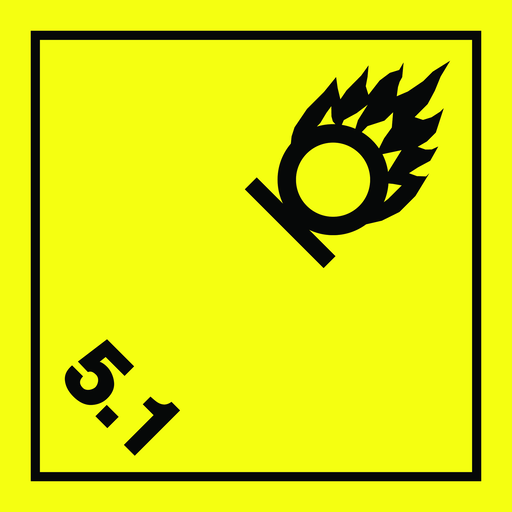
- The hazard label is a diamond on its point.
- Symbol on top = the type of danger; number on bottom = the class.
- Shape is the same worldwide so it's instantly recognisable.
- Flame on red = flammable liquid (Class 3).
- Flame on red/white stripes = flammable solid (Class 4.1).
The nine classes — in everyday words
This module — The nine classes — in everyday words — starts with "Classes 1, 2, 3 — bangs, gases, flames": Class 1 = explosives. Think fireworks, ammunition, blasting caps. They can go bang. Class 2 = gases. Think the LPG bottle on a BBQ, oxygen cylinders, the propane in a forklift. Pressurised, sometimes flammable, sometimes toxic. Class 3 = flammable liquids. Think petrol (UN1203), white spirit, paint thinner, methylated spirits. They can catch fire from a spark. Then, "Classes 4 and 5 — solids that burn, things that make others burn": Class 4 = flammable solids and similar. Think matches (Class 4.1), oily rags that can catch fire on their own (4.2), or sodium that reacts with water (4.3). Class 5 = oxidisers. They aren't themselves on fire, but they make other things burn much harder — think swimming-pool chlorine tablets (5.1) or organic peroxides like in some glue hardeners (5.2). A spill of an oxidiser into a flammable liquid is a recipe for a serious fire. Then, "Classes 6 and 7 — poisons and radioactivity": Class 6 = toxic and infectious. Think pesticides, cyanide, lab samples or medical specimens (6.1 toxic, 6.2 infectious). Class 7 = radioactive.
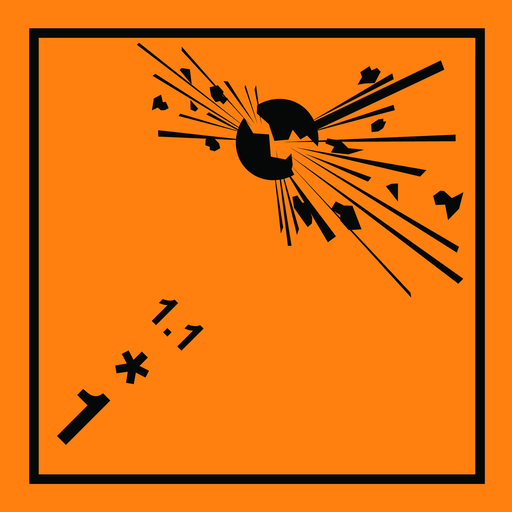



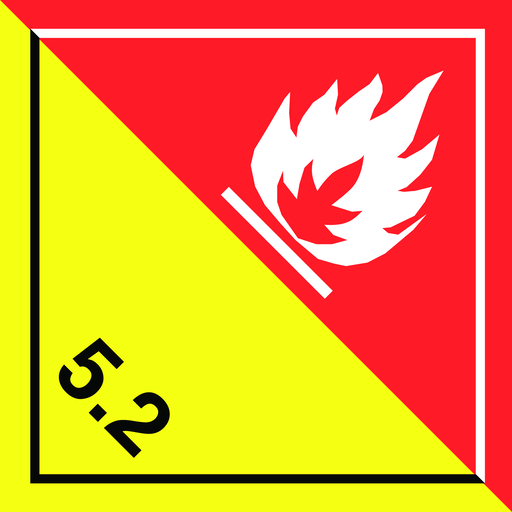
- Class 1 = explosives (fireworks, ammunition).
- Class 2 = gases (BBQ propane, oxygen cylinder).
- Class 3 = flammable liquids (petrol, paint thinner).
- Class 4 = flammable solids (matches, oily rags, water-reactive metals).
- Class 5 = oxidisers (pool chlorine, peroxides).
Packing group — 'how dangerous, exactly?'
This module — Packing group — 'how dangerous, exactly?' — starts with "Three levels of danger": Within a hazard class, products are graded by how dangerous they are. There are three levels — called Packing Groups: PG I = very dangerous (e.g. a highly volatile flammable liquid that ignites at very low temperatures). PG II = medium. PG III = lower danger (still regulated, but milder). Think of it like chilli heat: I is killer hot, II is medium, III is mild. Petrol (UN1203) is PG II. Diesel oil (UN1202) is PG III. Then, "Why packing group matters in practice": Why care? Because the packing group affects how strong the packaging must be, and sometimes affects how much you can carry under simpler rules. Stronger packaging for PG I; lighter packaging for PG III. So a worker shouldn't move a PG I substance in a PG III container — the container isn't built for it. Finally, "Not every class uses packing groups": Heads up — not every class uses packing groups. Class 1 (explosives), Class 2 (gases), Class 5.2 (organic peroxides), Class 6.2 (infectious substances) and Class 7 (radioactive) are managed differently.
- PG I = high danger.
- PG II = medium danger.
- PG III = lower danger (still regulated).
- PG affects packaging strength rules.
- PG I needs the strongest packaging; PG III the lightest.
What's ADR? Why does this matter?
This module — What's ADR? Why does this matter? — starts with "What 'ADR' actually means": ADR is short for the 'Accord européen relatif au transport international des marchandises Dangereuses par Route' — French for the 'European Agreement on the International Carriage of Dangerous Goods by Road'. In plain English: it's the rulebook for moving dangerous goods by road across Europe (and the UK and beyond). It is updated every two years (current edition is ADR 2025; the next is ADR 2027). Other modes have their own rulebooks: ships use IMDG, planes use IATA / ICAO TI, trains use RID. Then, "What ADR actually tells you": ADR is huge — but it answers a small set of questions: What is the substance (UN number, name, class, packing group)? How must it be packaged (drum, IBC, cylinder)? How must the package be labelled and marked? How must the vehicle be plated and placarded? What paperwork must travel with it? What training does the driver need? What equipment must the vehicle carry? What can it travel with (segregation)? What tunnels can it go through? What to do if something goes wrong (emergency response).
- ADR = European agreement on carriage of dangerous goods by road.
- Updated every 2 years — current edition is ADR 2025.
- Ship rules = IMDG; air rules = IATA/ICAO TI; rail = RID.
- Classification (UN, name, class, PG).
- Packaging, labels, marks, vehicle placards.
Reference card — keep in the cabThe 9 ADR classes — at a glance
| Class | Placard | What it means | Everyday example | If it leaks / spills |
|---|---|---|---|---|
| 1 | | Explosives Things that can bang or burn very fast. | Fireworks, blasting cord. | Keep clear. No flame, no spark. 999. |
| 2 | | Gases Compressed, liquefied or dissolved gas. | BBQ propane bottle, helium, oxygen. | Ventilate. No ignition source. 999. |
| 3 | | Flammable liquids Liquids that catch fire easily. | Petrol, paint thinner, ethanol. | Stop ignition. Absorb. Call 999. |
| 4 |  | Flammable solids Solids that burn, self-heat, or react with water. | Matches, sodium, magnesium. | Keep dry (4.3). No water if not sure. 999. |
| 5 | 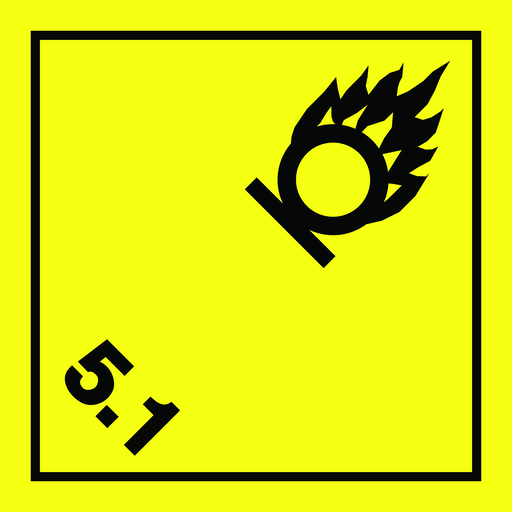 | Oxidisers / Organic peroxides Make other things burn even without air. | Pool chlorine, ammonium nitrate. | Keep away from fuels. 999. |
| 6 | 6 | Toxic / Infectious Poisons us or carries disease. | Pesticides, medical samples. | Do not touch. Mask. 999. |
| 7 | 7 | Radioactive Emits ionising radiation. | Medical isotopes, industrial gauges. | Distance + time + shielding. 999. |
| 8 | | Corrosives Eats skin, eyes, metal. | Battery acid, bleach, drain cleaner. | Goggles + gloves. Wash spill area. 999. |
| 9 | 9 | Miscellaneous Other dangers (lithium batteries, hot stuff, asbestos). | Power-tool batteries, dry ice. | Treat as dangerous. 999. |
If something goes wrong — ADR 5.4.3 in 4 steps
- Stop safely. Switch the engine off.
- Put on hi-vis vest and any PPE listed in your "instructions in writing".
- Keep people away. Do not eat, drink or smoke near the load.
- Call the emergency services and report: your location, the UN number(s), the hazard class(es), and what is happening.
Foundations · Completion of study materialCertificate of completion
has completed the DGMind Foundations study material on