Foundations
Module 3 of 6 · Foundations

The diamond hazard symbol

The diamond-shaped 'placard' that tells you what kind of danger a package or lorry carries.

ADR 2025 · 5.2.2 / 5.3.1
Friendly introduction & study aid. Not the official ADR certificate. The legal certificate comes from a DfT/SQA-approved training centre and the SQA exam.
Draft beginner content — pending review by a qualified DGSA

Lessons

Cyan · Lesson

Why a diamond?

15s Class 3 — flame Class 8 — corrosive ADR 2025 · 5.2.2.2
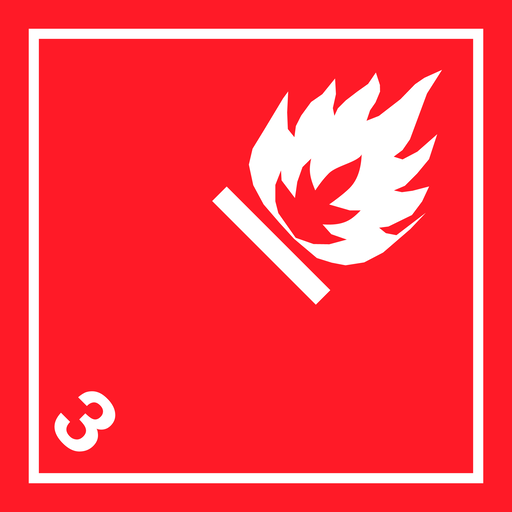
ADR hazard class 3 — FlammableClass 3 — flame
ADR hazard class 8 — CorrosiveClass 8 — corrosive

When you see a lorry or a parcel with a coloured diamond on the side, that diamond is the hazard label. A picture on top (a flame, a skull, a fish, a bomb) shows the type of danger. A number in the bottom corner shows the hazard class. The shape is the same all over the world — diamond on its point — so anyone, in any language, can recognise it instantly.

The hazard label is a diamond on its point.
Key points
  • Symbol on top = the type of danger; number on bottom = the class.
  • Shape is the same worldwide so it's instantly recognisable.
ADR Citation
ADR 2025 · 5.2.2.2
Hazard labels are diamond-shaped (square set at an angle of 45°) with the danger symbol in the upper half and the class number in the lower corner.
Draft content, pending DGSA review. Verify against the cited clause before relying on it.
Cyan · Lesson

Symbols you'll learn to recognise

20s Class 3 Class 4.1 Class 5.1 ADR 2025 · 5.2.2.2.1
ADR hazard class 3 — FlammableClass 3
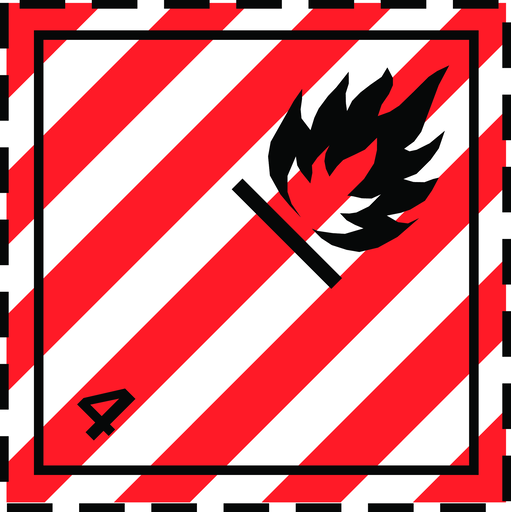
ADR hazard subclass 4.1 — Flam. solidClass 4.1
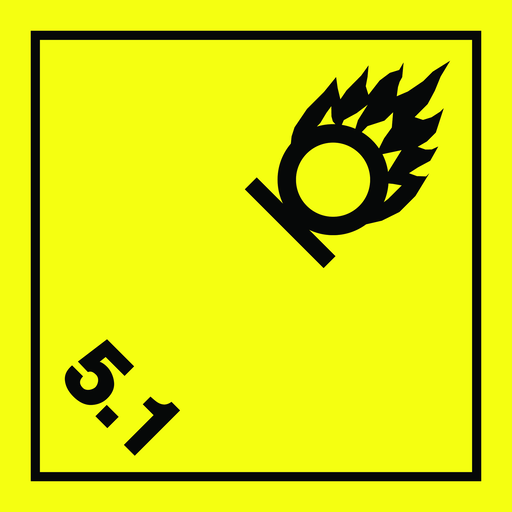
ADR hazard subclass 5.1 — OxidiserClass 5.1
6Class 6
ADR hazard class 8 — CorrosiveClass 8

Classes 6.1, 7 and 9 use illustrative placeholders until official artwork is supplied.

Here are some common ones. A flame on red = flammable (Class 3, like petrol). A flame on red-and-white stripes = flammable solid (Class 4.1, like matches). A circle with flame on yellow = oxidiser (Class 5.1, helps things burn). A skull-and-crossbones on white = toxic (Class 6). A test tube dripping on a hand on white-and-black = corrosive (Class 8, like bleach concentrate or strong acids). You don't have to memorise them today — just know each diamond means a specific kind of danger.

Flame on red = flammable liquid (Class 3).
Key points
  • Flame on red/white stripes = flammable solid (Class 4.1).
  • Skull on white = toxic (Class 6).
  • Test tube on hand = corrosive (Class 8).
ADR Citation
ADR 2025 · 5.2.2.2.1
ADR 5.2.2.2.1 sets out the danger symbols, background colours and class numbers for the diamond labels of each class.
Draft content, pending DGSA review. Verify against the cited clause before relying on it.
Cyan · Lesson

The 'fish-and-tree' (environmentally hazardous)

10s ADR 2025 · 5.2.1.8

Sometimes you'll see a black diamond showing a dead fish and a dead tree. This is the environmentally hazardous / marine pollutant mark — meaning the substance is bad for water and wildlife. Keep spills out of drains and rivers. Lots of products carry this in ADDITION to their main hazard diamond.

Dead fish + dead tree = environmentally hazardous.
Key points
  • Means: bad for water and wildlife.
  • Often shown in addition to the main hazard diamond.
ADR Citation
ADR 2025 · 5.2.1.8
The environmentally hazardous substance mark (the 'dead fish and tree' symbol) is required for substances meeting the criteria for an environmental hazard.
Draft content, pending DGSA review. Verify against the cited clause before relying on it.
Cyan · Lesson

Small diamond, big diamond — same idea

20s ADR 2025 · 5.3.1 / 5.3.2

On a small parcel the diamond is small — that's the 'label'. On the side of a lorry or a tanker the same diamond is BIG (about 25 cm) — that's the 'placard'. Same symbol, just bigger so it's visible from outside. There's also a plain orange rectangle (no symbol) front and back of vehicles carrying dangerous goods — sometimes with extra numbers for tankers (UN number + a hazard ID). You'll cover orange plates in detail later.

Label = small diamond on a package.
Key points
  • Placard = same diamond, big (≥250 mm), on the vehicle.
  • Plain orange rectangle = 'this vehicle carries dangerous goods'.
ADR Citation
ADR 2025 · 5.3.1 / 5.3.2
ADR 5.3.1 requires enlarged placards on the sides and rear of vehicles/containers carrying dangerous goods; 5.3.2 requires plain orange-coloured plates front and rear (with hazard identification + UN numbers for tanks/bulk).
Draft content, pending DGSA review. Verify against the cited clause before relying on it.

Practice questions

0 / 4 answered
  1. 1
    What shape is the standard hazard label?
  2. 2
    Where on the diamond is the class number shown?
  3. 3
    A diamond with a flame on a plain red background most likely means:
  4. 4
    What does the 'dead fish and tree' symbol mean?
Practice quiz — pick an answer to see whether it's right and why.